Loading... Please wait!

T-Bills vs High-Yield Savings for Short-Term Cash

Compare Treasury Bills and High-Yield Savings Accounts for safer, smarter short-term cash management.

Treasury Bills vs High-Yield Savings: Best Place for Short-Term Cash

Treasury Bills vs High-Yield Savings: Where Should You Keep Short-Term Cash?

Comparison between Treasury Bills and High-Yield Savings Accounts for managing short-term cash in the United States.
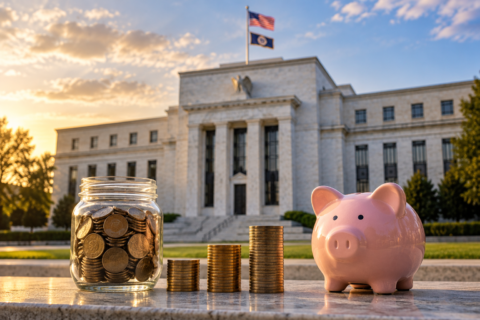
Smart ways Americans manage short-term cash safely. Photo by AI.

Is your money working… or just lounging on the couch doing absolutely nothing?

If you’re an American with cash set aside for the next few months — maybe for a home down payment, a vacation, an emergency fund, or money waiting for the right opportunity — you’ve probably asked yourself the classic question:

Treasury Bills vs High-Yield Savings: which one actually makes more sense?

It’s kind of like choosing between:

💼

Treasury Bills

The Reliable Government Employee
  • Predictable, locked-in rates
  • Exempt from state/local taxes
  • Money is locked until maturity
MOST FLEXIBLE

High-Yield Savings

The Flexible Modern Freelancer
  • Instant access to your cash
  • Takes 5 minutes to set up
  • Rates can drop at any time

Both are safe. Both earn interest. Both sound boring at first.

But one of them could quietly put more money in your pocket depending on your goal.

Let’s get straight to it.

First: What Are Treasury Bills?

Treasury Bills — or simply T-Bills — are short-term debt securities issued by the U.S. government.

In plain English: 🦅 You’re lending money to the United States.

And let’s be honest…

If the U.S. government collapses, your investment returns will probably be the least of your concerns.

T-Bills come with short maturity periods:

📅 4 weeks
📅 8 weeks
📅 13 weeks
📅 17 weeks
📅 26 weeks
📅 52 weeks

You buy them at a discount and receive the full face value when they mature.

Example:

💵 Buy for $9,750
💵 Receive $10,000 later

Your profit is the difference.

Simple. No confusing banking tricks.

Visually, it works like this:

How the T-Bill Discount Works

💸 You Pay Today $9,750
Wait
Time Passes (e.g., 26 weeks)
Mature
💰 You Receive $10,000

The $250 difference is your profit. Simple. No confusing banking tricks.

The Treasury basically says: “Thanks for the loan. Here’s your money back with a little bonus.”

Clean. Efficient. Very American.

What Is a High-Yield Savings Account?

Think of it as savings… but upgraded.

Unlike traditional bank savings accounts that offer laughably low rates like 0.01% APY (which is basically a polite insult), High-Yield Savings Accounts offer much stronger returns.

Today, many U.S. online banks offer competitive rates.

Example:

🏦 Deposit $10,000
📈 Interest appears automatically
🔓 Withdraw whenever you want

No lock-up period. No Treasury auctions. No maturity dates.

Just: Deposit and chill.

For many people, that convenience alone wins the argument.

Because simplicity has value too.

The Showdown: Treasury Bills vs High-Yield Savings

Let’s settle this.

🥊 The Official Scorecard

Click a round to see why

Round 1: Yield 🏆 T-Bills
Why they win: T-Bills track government interest rates directly. Banks, on the other hand, can lower HYSA rates whenever they want to protect their own profit margins.
Round 2: Liquidity 🏆 High-Yield Savings
Why they win: Instant access. You can transfer your money back to your checking account in seconds. T-Bills lock your money up, and selling them early before maturity can be a hassle.
Round 3: Taxes 🏆 T-Bills
Why they win: T-Bill interest is completely exempt from state and local taxes. If you live in a high-tax state like California or New York, this puts significantly more money in your pocket compared to a fully-taxable HYSA.
Round 4: Simplicity 🏆 High-Yield Savings
Why they win: You can open an HYSA on an app in 3 minutes. Buying T-Bills means navigating TreasuryDirect, a government website that hasn’t seen a design update since the early 2000s.
Round 5: Predictability 🏆 T-Bills
Why they win: Your rate is locked in. If you buy a 6-month T-Bill, you know exactly what you will earn. HYSA rates are variable and banks can drop them tomorrow without warning.

So… Who Wins?

It depends on who you are. Classic finance answer. Still true.

Choose T-Bills If You:

✔ Don’t need immediate access
✔ Want predictable returns
✔ Live in a high-tax state
✔ Want to maximize yield
✔ Don’t mind a little setup hassle

Your personality type:

🧠 “Spreadsheet enthusiast who gets excited about optimizing 0.35%” Respect.

Choose High-Yield Savings If You:

✔ Want instant access
✔ Hate unnecessary complexity
✔ Prefer convenience
✔ Are building an emergency fund

Your personality type:

😌 “I want peace, returns, and zero drama.”

Also respectable.

What If You Use Both?

Plot twist:

This might actually be the smartest move.

Split your money like this:

Emergency cash

→ High-Yield Savings

(For real emergencies: car trouble, medical bills, surprise travel)

Planned short-term money

→ T-Bills

(Example: home down payment in 8 months)

This gives you:

⚡ Liquidity
📈 Optimized returns
🛡 Safety

The best of both worlds.

Like having cake and eating it too.

Still not sure why people say that, but here we are.

A Real Example

🎛️ The “Best of Both Worlds” Allocator

Assume you have $20,000. Move the slider to build your perfect strategy.

HYSA (Instant Access) T-Bills (Locked Yield)
Emergency Cash $8,000
Working Capital $12,000

Balanced: You have a solid emergency buffer and optimized yield.

Let’s say you have $20,000.

Split it like this: $8,000 in High-Yield Savings. Instant access.

$12,000 in rolling 13-week T-Bills

Better yield.

Result: Your money works in shifts.

Part stays on standby. Part works overtime.

It’s basically a small business.

Without HR meetings.

The Mistake Many Americans Still Make

🛑 The "Lazy Money" Trap

If you leave $25,000 sitting in a traditional bank account (0.05%) instead of moving it to a T-Bill or HYSA (4.8%) for one year...

Traditional Bank (0.05%) You earn $12.50
Optimized (4.8%) You earn $1,200
You just lost $1,187.50. That money could have paid for:
  • A round-trip international flight ✈️
  • A brand new iPhone 📱
  • A highly suspicious amount of takeout 🍔

So Which One Is Better?

If you want maximum efficiency:

Treasury Bills: If you want maximum convenience:

High-Yield Savings: If you want balance:

Use both For many Americans managing short-term cash, this is the smartest strategy.

Because personal finance is rarely about finding one perfect product.

It’s about matching the tool to your goal.

Your timeline.
Your comfort level.
Your priorities.

Final Verdict on Treasury Bills vs High-Yield Savings

There’s no bad option here.

Both are excellent.

The real enemy is leaving your money parked in a near-zero-interest account while inflation throws a party.

If your short-term cash is just sitting there:

Do something with it.

Today.

Your future self will thank you.

And honestly?

Few things feel better than making money while you sleep.

Gabriel Gonçalves
Written by

Gabriel Gonçalves

I have been a content producer for over 10 years, specializing in online writing across a wide range of topics—particularly finance, health, and human behavior. I’m an expert in SEO-driven writing and cultural research.