Loading... Please wait!

Holiday Spending Without January Debt

Learn smart holiday budgeting strategies to enjoy the season, control spending, and avoid starting January in debt.

How to Avoid Holiday Debt

Minimalist holiday scene with wrapped gifts, warm lights, and a clean budgeting setup symbolizing debt-free seasonal planning.
Smart holiday spending starts with planning. Photo by Magnific.

Every year, millions of Americans fall into the same seasonal pattern.

It starts with glowing storefronts, endless promotions, and that familiar feeling in the air: “This holiday season will be unforgettable.”

Then January shows up carrying a credit card statement that feels less like mail and more like a financial reality check.

This site’s view is simple:
If celebrating requires borrowing money you cannot quickly repay, the celebration is already costing too much.

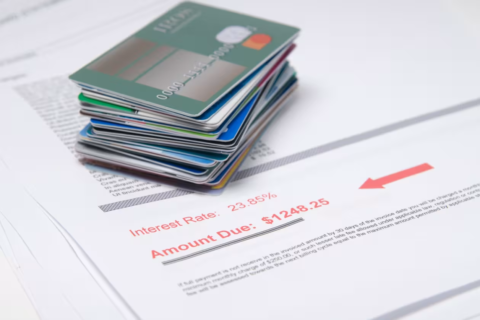
Recent Federal Reserve data shows revolving consumer credit in the U.S. remains above $1.3 trillion, while many major credit cards continue charging interest rates well above 20% APR.

That “limited-time deal” can quietly become a year-long expense.

And that is exactly why this conversation should happen now.

Because when it comes to holiday spending, preparation changes everything.

🎄 Great holidays create memories.

They should not create debt that follows you into spring.

Why do holiday budgets collapse so easily?

Because the season creates a perfect storm of pressure.

Three forces hit at once:

  • emotional expectation
  • aggressive retail urgency
  • constant comparison

You scroll social media and see:

  • picture-perfect family gatherings
  • luxury gifts
  • expensive trips
  • homes decorated like movie sets

And without realizing it, your brain starts translating all of that into obligation.

“Everyone else is doing more. I should too.”

That thinking gets expensive fast.

Research from the American Psychological Association shows emotionally heightened environments often weaken logical financial decision-making.

Holiday shopping is practically designed to trigger emotional spending.

Small purchases become big problems

Most financial damage does not come from one giant purchase.

It usually comes from dozens of smaller ones.

Here is a realistic breakdown:

ExpenseTypical Cost
Gifts$900
Decorations$160
Holiday travel$700
Dining and events$350
Last-minute extras$250
Total$2,360

Put that balance on a high-interest card and make minimum payments?

That holiday season can end up costing thousands more than expected.

The original price tag was only the beginning.

The biggest financial lie of the holidays

“I’ll recover next month.”

That sounds reasonable in December.

Then January arrives with:

  • rent
  • insurance renewals
  • post-holiday utility bills
  • annual subscriptions
  • fresh financial goals already under pressure

Recovery becomes harder because the debt arrived before the plan did.

Planning ahead changes that entirely.

🔥 Smart holiday rule:

If January cannot comfortably absorb the purchase, December should not make it.

Build structure with the 4-2-1 system

A simple split works well:

Spending AreaAllocation
Gifts40%
Experiences20%
Travel20%
Unexpected costs10%
Financial cushion10%

For a $2,500 budget, that means:

  • $1,000 gifts
  • $500 experiences
  • $500 travel
  • $250 flexible reserve
  • $250 untouched protection

This creates boundaries before emotion enters the conversation.
And boundaries protect cash flow.

A practical example

Jessica, 34, from Seattle, used to treat holiday shopping as a reaction.

One year she spent $3,400 across gifts, travel, parties, and impulse purchases.

By spring, she was still paying it off.

The next year she started in September.

She automated weekly transfers into a separate savings bucket. By December, she had cash ready.
The experience felt lighter. Not smaller. Better.

The difference was not income. It was planning.

Budgeting tools worth using

YNAB

Excellent for intentional planners.
Challenge: requires consistency.

Rocket Money

Very beginner-friendly.
Challenge: less detailed control.

Monarch Money

Beautiful interface and strong organization.
Challenge: subscription cost.

Truthfully?
The best system is the one you actually maintain.
Fancy software means nothing if ignored.

💰 Start early

Time lowers pressure

🎁 Spend on purpose

Thought beats excess

📉 Protect cash flow

Keep January clean

The hidden leak: tiny extras

Holiday overspending often hides in “small harmless additions.” An extra candle.
One more dessert. Another stocking stuffer.

A second wrapping paper set because the first “didn’t feel festive enough.” Each one seems minor.

Combined, they quietly wreck discipline.

The season rewards awareness. Not endless adding.

Meaningful gifting beats expensive gifting

A common American trap is equating love with spending.

That connection is profitable for retailers. But rarely true in real life.

People tend to remember:

  • thoughtful experiences
  • handwritten notes
  • useful gifts chosen carefully
  • personal gestures

Not receipts.

💡 Minimalist move

Connection leaves a longer impression than cost ever will.

When using credit makes sense

A card works if:

✓ funds already exist
✓ rewards create value
✓ purchases will be paid immediately
✓ protection features matter

A card becomes dangerous if:

✗ it replaces missing cash
✗ it delays unavoidable financial pain
✗ it depends on future income uncertainty

Credit should support discipline. Not replace it.

The smartest time to begin

Start in late summer. August and September are ideal.
If your target is $3,000, saving $500 per month for six months feels manageable.

Trying to solve that in December feels impossible. Time creates ease.

Delay creates pressure.

Final reflection questions

Before buying, ask:

✓ Was this planned?
✓ Does it match my priorities?
✓ Would I still buy it if cash were required today?
✓ Will this feel wise in January?

Two “no” answers? Pause. Reconsider.

💭 Better holiday thinking asks:

“Will this decision still feel good after the season ends?”

Final thought

Financially sharp people do not avoid holiday joy.
They simply refuse to finance it carelessly.

They understand something most consumers ignore:

The season is temporary. Its financial consequences are not.

Prepare early. Automate intentionally. Spend with clarity.

Then enjoy the holidays fully —
without starting the new year repairing the damage.

Frequently Asked Questions

The ideal time is August or September. Starting early allows smaller monthly contributions, which makes holiday spending feel manageable instead of overwhelming in December.

Yes — but only if you already have the cash to pay the balance in full. In that case, credit cards can offer rewards, cashback, and purchase protection without creating debt.

Waiting too long to plan. Last-minute holiday spending usually leads to emotional purchases, poor financial decisions, and unnecessary credit card balances.

Focus on meaningful experiences, thoughtful gifts, and intentional traditions instead of expensive purchases. People remember connection far more than price tags.

Ask yourself this: “Will I still feel good about this purchase when the January credit card bill arrives?” If the answer feels uncertain, it is probably worth reconsidering.
Gabriel Gonçalves
Written by

Gabriel Gonçalves

I have been a content producer for over 10 years, specializing in online writing across a wide range of topics—particularly finance, health, and human behavior. I’m an expert in SEO-driven writing and cultural research.