Wondering why your grocery bill is so steep? Discover the reasons behind it
Grocery costs are soaring. Discover the factors behind rising food prices, which items are becoming more expensive, and how to spot what's impacting your spending the most.
Why your grocery budget isn’t stretching as far these days
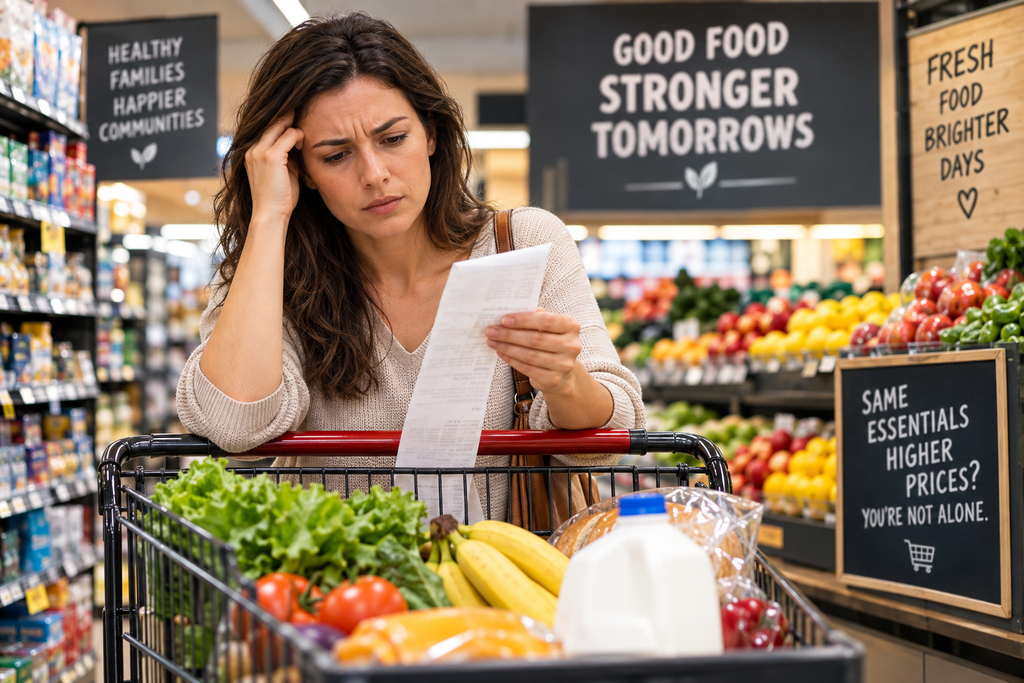
Your grocery bill remains high because food prices in the U.S. are still well above pre-pandemic levels, even though the rate of grocery inflation has eased.
According to the U.S. Bureau of Labor Statistics (BLS), prices for food bought to eat at home rose 2.2% compared to the previous year.
This means that a slower inflation rate doesn’t automatically translate to paying less at the grocery store. Instead, prices are just climbing at a more gradual pace.
For American families juggling rent, utilities, transport, healthcare, and other daily costs, that difference is significant.
So, what explains your grocery bill remaining high? Multiple factors play a role, including the buildup of food price increases over time.
Why Are Grocery Bills So High in 2026?
Your grocery bill is elevated because food prices reflect years of steady increases, while different grocery categories continue to change at varying speeds.
The USDA Economic Research Service (ERS) predicts that food prices for at-home consumption will rise by 2.5% in 2026, though their forecast carries some uncertainty.
It’s crucial to understand that the national average doesn’t capture the full picture.
Grocery inflation is easing, yet grocery costs remain high
Inflation tracks how fast prices rise or fall, but it doesn’t show if prices have dropped back to earlier levels.
For instance, if an item costs $5 and increases to $6, the price stays at $6 even if inflation later hits zero.
This situation reflects what many shoppers across the U.S. are currently facing.
According to NerdWallet’s review of BLS statistics, food prices in March 2026 were 33.4% higher than in March 2020, while average hourly wages rose 31.9% over the same timeframe.
Bottom line: just because food inflation is slowing doesn’t mean grocery prices have dropped back to 2020 levels.
What Factors Are Driving Grocery Prices Higher?
Multiple factors can influence grocery prices all at once.
The main challenge for shoppers is that different food categories don’t react to economic changes uniformly or simultaneously.
Rising beef prices are heavily impacting grocery budgets
Beef stands out as a prime example of why some households see higher grocery bills.
Data from the USDA ERS shows beef and veal prices rose 9.4% in July 2026 compared to the previous year, with the USDA projecting a 9.8% increase for 2026.
The USDA also noted that federally inspected beef production dropped nearly 5% in July, tightening supply and pushing wholesale beef prices higher.
For households that frequently buy ground beef, steaks, or other beef cuts, these changes can impact their grocery bills far more than the average inflation rate.
How transportation and energy expenses influence the food supply chain
Food doesn’t travel straight from farms to your kitchen.
It often moves through farms, processing facilities, storage warehouses, refrigerated trucks, distribution hubs, and grocery stores.
Each of these steps depends on transportation and energy to operate.
In August 2026, the BLS noted that the energy index rose 16.3% compared to the previous year, with motor fuel costs climbing 27.9%.
While energy expenses contribute to food prices, it’s incorrect to blame all grocery price increases solely on fuel costs.
Still, transportation and energy expenses can increase costs at various points along the supply chain.
Which Grocery Prices Are Increasing the Most Quickly?
The categories seeing the largest price jumps aren’t always the ones most households buy regularly.
This is why relying solely on the national grocery price index can give a misleading picture.
Nonalcoholic beverages
According to the BLS, nonalcoholic drinks cost 3.7% more in August 2026 compared to the previous year.
For families who regularly buy bottled water, soda, juice, or similar drinks, small price hikes can accumulate throughout the month.
Fruits and Vegetables
In August, prices for fruits and vegetables were 3.2% higher year-over-year, though from July to August they actually dropped by 0.4%.
This highlights a key point in grocery shopping: prices may increase over the year but still fall when comparing one month to the next.
Eggs
Egg price trends show why it’s important to consider changes over both months and years.
In August 2026, egg prices climbed 2.9%, yet they were still 23.0% lower than the same time the previous year, based on NerdWallet’s analysis.
So if eggs seem pricier than last month, that doesn’t automatically mean they’re facing long-term inflation.
Why Does My Grocery Bill Feel Like It’s Rising Faster Than Inflation?
Your grocery expenses can rise more quickly than the national food-at-home inflation rate because the items you buy differ from the standard basket used to calculate the average.
This is a key explanation for those wondering, “Why does my grocery bill feel so high?”
How your shopping choices affect your personal food inflation rate
Consider two families. Household A mainly buys:
- Rice
- Pasta
- Dairy
- Chicken
- Store-brand products
Household B’s purchases mainly include:
- Beef
- Fresh produce
- Branded snacks
- Beverages
- Specialty items
While both households face the same overall economy, their grocery expenses can vary widely.
What you buy can influence your grocery inflation just as much as national trends.
Why the national CPI doesn’t reflect your personal grocery inflation
The BLS Consumer Price Index tracks how prices change for a typical group of goods and services.
However, it doesn’t reflect the exact inflation rate that your own household experiences.
That’s why a 2.2% rise in the national food-at-home index doesn’t necessarily mean your grocery bill will go up by the same amount.
How Much Should an American Family Allocate for Groceries?
There isn’t a one-size-fits-all grocery budget that applies to every American household.
Factors like household size, age, where you live, dietary preferences, and shopping routines all influence how much you spend on food.
The USDA offers food-at-home spending plans tailored to various budget levels.
According to NerdWallet’s review of USDA data, a family of four following the USDA’s Thrifty Food Plan would spend about $1,013 monthly, totaling over $12,000 per year.
This amount should be viewed as a guideline rather than a strict spending cap.
A more useful question than “How much should groceries cost?”
Rather than wondering, “What should my grocery bill be?”
Try asking: “Which food categories are driving my grocery costs up?”
This approach offers a clearer, more practical insight because it links the overall food price trends to what you actually spend.
How Can You Lower a High Grocery Bill?
The easiest way to reduce a high grocery bill is to figure out which categories cost you the most and focus your efforts there first.
After tracking your spending for four weeks, identify which categories make up the biggest portion of your expenses.
Compare prices by unit
The price shown on the shelf doesn’t always tell the full story.
Look at the cost per ounce, pound, quart, or other standard unit when comparing different brands and package sizes.
Buying a bigger package might lower the unit price, but only if you’re certain you’ll use it all.
Plan meals using budget-friendly ingredients
The USDA’s projections show that different food groups can have very varied price trends.
For instance, beef and veal are expected to see significantly higher price increases in 2026 compared to other types of protein.
This allows shoppers to adjust their meal planning with more flexibility.
When beef prices spike in a given week, you can switch to using another protein you already have on your shopping list.
The aim isn’t to cut out the foods you love.
Rather, it’s about preventing one pricey category from taking over your whole grocery budget.
Make the most of discounts
Using coupons, loyalty rewards, and cash-back deals can lower your grocery expenses.
However, a discount only benefits your budget if it cuts the price of items you were already planning to buy.
CNBC Select suggests tactics like using store promotions and adapting shopping patterns to help lower grocery expenses.
Bankrate has also explored grocery rewards programs and credit card options that can help reduce the cost of everyday grocery purchases.
Getting 20% off an item you don’t need still counts as spending money.
How September Affects Your Grocery Spending
September often puts extra strain on household food budgets as it overlaps with back-to-school expenses and the start of fall routines.
Households may be purchasing extra lunch supplies, snacks, and beverages, while Labor Day events often lead to additional food buying.
How back-to-school shopping raises food expenses
Going back to school often changes how families shop weekly for groceries.
Instead of just buying dinner items, households might also need to purchase:
- Lunch ingredients;
- Packaged snacks;
- Breakfast foods;
- Beverages;
- Portions suitable for school.
The simplest way to keep these costs from sneaking up on your budget is to plan for them in your grocery list ahead of time.
Labor Day often triggers a short-term rise in grocery spending
Labor Day took place on September 7, 2026.
Events like cookouts and get-togethers tend to boost demand for meats, drinks, snacks, and various other food items.
Instead of folding these purchases into your regular weekly grocery budget, treat them as a distinct seasonal expense.
What Can We Expect for Grocery Prices in the Remainder of 2026?
The USDA’s latest projection shows that food-at-home prices are set to rise by about 2.5% during 2026.
This forecast spans a range from roughly 1.7% up to 3.3%, highlighting the uncertainty around how conditions might develop.
What’s key is that the USDA doesn’t anticipate all grocery categories will increase at the same pace.
Some categories are expected to rise faster than their usual averages, such as beef and veal, seafood, and fresh fruits and vegetables.
Can shoppers expect grocery prices to drop soon?
Not exactly.
Even if inflation slows, it doesn’t mean stores will revert to the prices shoppers were used to in 2019 or 2020.
A more useful question for managing your budget is whether specific food groups keep increasing in price and how much those items make up your regular purchases.
How to Discover What’s Driving Up Your Grocery Expenses
If you’re trying to figure out why your grocery bill is so high, follow this straightforward method:
Step 1 — Review your last four grocery receipts
Check for items that have gone up in price consistently over time.
Step 2 — Determine your largest spending categories
Estimate how much you typically spend on meat, fruits and vegetables, dairy, drinks, and packaged goods.
Step 3 — Review the cost per unit
Look at different brands and package sizes by comparing their price per identical unit.
Step 4 — Explore alternative options
When a category seems pricey, think about whether a different product could fulfill the same need more affordably.
Step 5 — Review your budget again next month
Food prices fluctuate.
What works as a substitution today might not be practical next month.
The aim isn’t to perfectly forecast grocery prices, but to adapt your household budget to the prices you actually encounter.
Author’s Perspective
When your grocery bill feels steep, it’s tempting to assume every item in the store has gotten more expensive.
Over the past year, the national food-at-home index rose by 2.2%, though price changes varied widely across different categories.
Items like beef, drinks, and fresh produce often impact individual households far more than the overall average indicates.
That’s why simply slashing your total grocery spending might not be the most effective initial move.

Recommended Content
Loan Rate Too High
Find out how the September 30 deadline can lower interest rates on eligible federal student loans through automatic payments.
Continue reading * You will remain on the current website